Wednesday, May 31, 2006

Of White Powders and Other Benefits

What really bothers Ashok Singhal and his Vishwa Hindu Parishad? If you're wanting to answer that, you need look no further than his recent diatribe against Amartya Sen. Sen's steady calls for ending illiteracy in India, along with his Nobel prize, is a "Christian conspiracy" that is going to destroy Hinduism.
This is the bizarre thesis Singhal has chosen to foist on us. In so doing, he also tells us the truth: he really cannot stand the idea of ending illiteracy in India.
Poor Ashok Singhal. Try, won't you, to imagine how the prospect terrifies him. The more India's masses get educated, aware, the more we will start asking questions. We will ask questions about our condition; about the dirt, injustice, hunger, corruption, thirst, disease and oppression that lie everywhere. We will ask questions about Singhal's rhetoric about temples and conspiracies and spreading radioactive sand around the country: rhetoric that was deliberately designed for an essentially unquestioning audience. We will want to know exactly what this rhetoric has to do with any of the daily problems in our lives. And as we ask those questions and get no answers, we will see clearly just how empty Ashok Singhal's bag of tricks really is.
That is what bothers Singhal. The thought of facing such questions frightens him. That is why he really wants us Indians to remain largely illiterate. That is why he heaps abuse on literacy, Amartya Sen and Christianity.
So rampant is the perversity in all this that it is difficult to know where to start arguing against it. Of course, Amartya Sen needs no help from me. So let me instead discuss Christianity and illiteracy.
In a country that contains over 800 million Hindus, Singhal wants to persuade you that 20 million Christians pose a threat to Hinduism. Almost two millenia of Christianity, with all the rabid missionary fervour its zealots have exhibited in those years, has "succeeded" to the extent of bringing one in every fifty Indians to the church. Compare that to the stellar success illiteracy has had in remaining entrenched in India: after a mere 50 years of Independence, we have more illiterate Indians -- over 450 million -- than we had Indians at Independence. Today, one of every two Indians cannot read and write; according to the UNDP's Human Development Report, about one of every three adult illiterates in the world in 1993 was an Indian.
The extent to which this disgrace weakens India, to which it threatens the survival of India, is entirely opaque to Ashok Singhal -- or, more likely, he purposely chooses that opacity. If there is a danger to Hinduism, surely it is that hundreds of millions of Hindus — of Indians — live such deprived, oppressed lives. Yet Singhal cares not a whit about them.
Instead, perhaps sensing that people are tiring of his Parivar's campaign against 120 million Indian Muslims, he decides to whip up hatred against 20 million Indian Christians. It must be a strange and twisted mind that sees those 20 million as a threat to a vast, ancient religion. But Singhal, his muttering VHP cronies and their followers possess just such minds. That, again, is why they are so scared of any talk of literacy — like from Amartya Sen.
What's far worse, they deliberately blind themselves to the extent to which so many low-caste and tribal Indians themselves see converting to other religions as the only way to escape oppression and misery.
Take what a tribal leader I interviewed recently told me: "High-caste Hindus don't treat humans as humans. They will feed milk to snakes, but they will kick people. They send money to build a temple, but none for people. Just saying [the word] dharma does not make dharma. This is why some of us convert to Islam or Christianity."
Take, too, what a Pardhi tribal I met in Maharashtra's Satara district said: "We think of ourselves as Hindus. But if we can't get justice here in India, where will we get it, in Pakistan? We don't want this kind of Hinduism, where we are treated as criminals. If this goes on, we will have no choice but to convert."
When I quoted this last man in a column here some months ago, I got a flood of angry responses attacking me for "criticising" the BJP and its Parivar. None of these email-happy dudes stopped to think: what's the real problem here? That there are people who feel this way? Or that it got reported? When will Singhal and his gang understand that there are Indians who themselves decide that they want to switch religions? That they are no part of any conspiracy?
And yet, the real tragedy is that converting will change their lives so little. One reason for that is the silly pretexts for which the actual conversion often happens. In a recent Sunday Observer report, Sunil K Poolani tells of a tribal in Gujarat who was offered "a white powder" by nuns from the Church of North India. They told him it was "God's prasad" and could "cure any illness"; that and some catechism classes convinced the man to convert.
This miraculous prasad, Poolani learned, is nothing more divine than powdered Crocin (a paracetamol tablet). The motive of these oh-so-generous representatives of the Church, then, is clearly nothing more divine than more numbers added to the fold. No wonder this tribal's brother is now "seriously thinking" of reconverting: a Hindu group told him that "they would give us more benefits than what the church does." After all, it takes very little to promise "more benefits" than powdered tablets and a few classes.
This is how unbelievably mindless this whole business of converting and reconverting is. This is it: religion reduced to membership in clubs.
There's another reason conversion from one religion to another, by itself, can hardly change lives for the better. Too often, the caste prejudices converts are trying to escape simply carry over into their new religions, as terms like "Dalit Christian" hint at. The ill-treatment continues irrespective of religion: because what defines so many Indian lives is not religion, but caste.
So if Ashok Singhal is truly worried about Hinduism, he might recognise that little truth. He might try to understand that Hinduism, and India, will flourish only when we break the stranglehold caste has on us all.
Only, Singhal's various pronouncements tell us that what he truly wants is something quite different: for those at the bottom of the caste totem pole to remain there, illiterate and unquestioning. He will not even recognise the paradox in that. As long as illiteracy is widespread, there will be those who fall for devious allurements like powdered tablets; whose conversions so annoy Singhal. Fighting illiteracy and oppression is the way to prevent people converting. But instead, this man rants at literacy.
Another tribal told Sunil K Poolani: "[F]or us, religion is immaterial — what is important is that we get basic amenities." The equation is that simple. But for the strange minds of the VHP, even that must be too hard.
— Dilip D'Souza
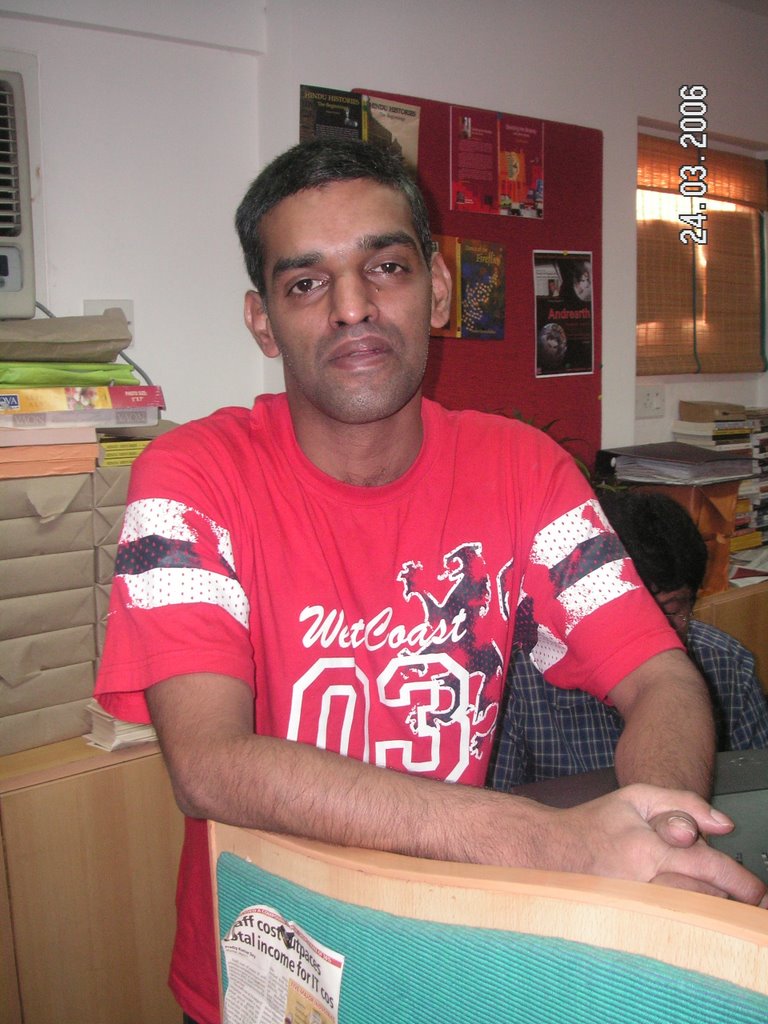
Picture of Sunil K Poolani by Shilpika Bordoloi

Thursday, April 27, 2006

Out for the Kerala count


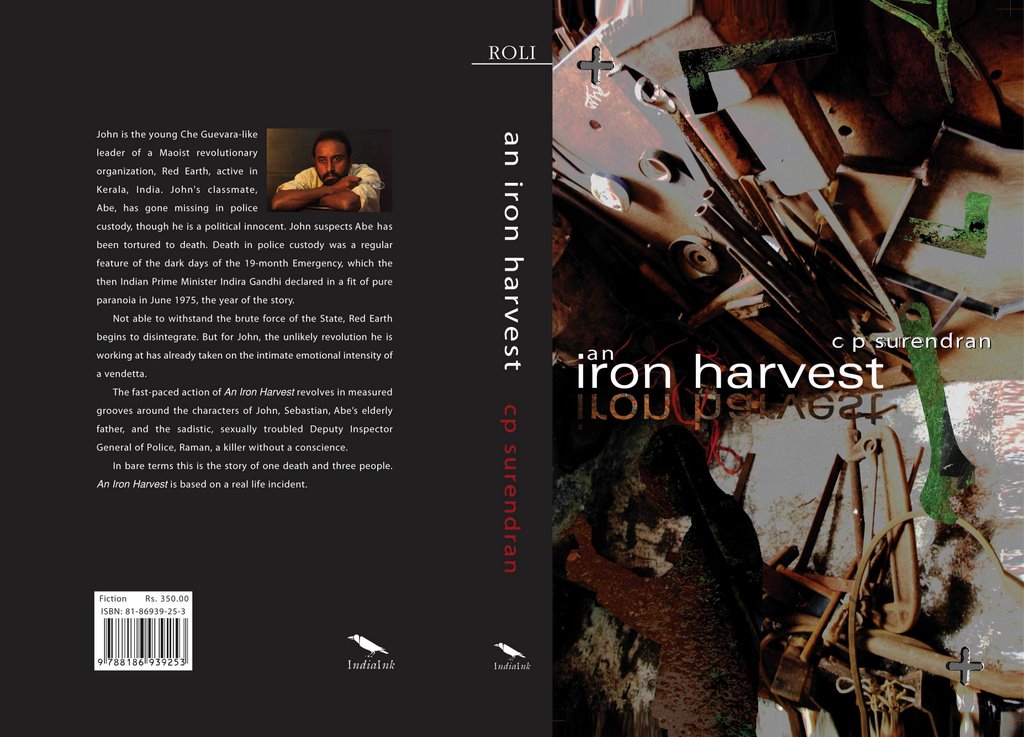
An Iron Harvest
CP Surendran
India Ink/Roli Books
326 pages, Rs 350
Poet-journalist CP Surendran’s first novel is journalism in a hurry. Here is a book where the words shine with a splendour befitting — when he is in his element — one of the best prose writers in India. But that cannot camouflage yet another manifestation of the chromosome that periodically forces Kerala-born writers to “go back to the roots”, to mix Kathakali and communism (or one of its mutations), pickles and backwaters, green expanses and the natives’ perennial greed for National Panasonic and Sony colour television sets.
An Iron Harvest is part social allegory, part ‘faction’, that unholy matrimony of truth and publishing necessity. It is loosely based on a true story, and a famous one to boot: of the young and idealistic engineering student, Rajan, who was killed in police custody sometime during the days when India was writhing under the Indira Gandhi-enforced emergency. The book also incorporates the arduous and solitary fight waged by Echara Warrier, Rajan’s hapless father, against the establishment. Warrier and Rajan become Sebastian and Abe in the novel, but the Gandhi clan retains its moniker.
The novel starts promisingly enough, with a murder. John (the protagonist of the novel), who thinks he is Che Guevara, heads a Maoist revolutionary organisation called Red Earth. He plans a programme to annihilate Ku Thampran, a running dog of cruel capitalism, who has been exploiting the tribal communities he lords over in the high ranges of Wayanad. Blood and gore start splattering soon enough and the murderous pyrotechnics extend to the novel’s end.
Parallel to violence being unleashed as the class war breaks out is the rendering of Sebastian’s wanderings, which even take him to Delhi in a forlorn struggle to restore the honour of his dead son. Unlike the man he is modelled after, Sebastian manages to find a few slivers of salvation.
Many of the characters populating An Iron Harvest ring familiar bells: Kerala Home Minister Shankaran Marar (K Karunakaran, in real life); DIG, Kerala Crime Branch, Raja Raman (Jayaram Padikkal); IG Anand Nambiar (Madhusoodanan Nair). If Raja Raman is a brute, Nambiar is an effeminate character who is fond of staging plays (he is the stage Ravana) and finally marries the Sita from his never-staged play. But from a reader’s point of view, these characters are cloaked more in darkness than light.
Surendran has style — “a long narrow table on which books leaned against each other like friends caught in a crisis” — and way too much substance. It is apparent that the author wanted to use every horrific detail of the emergency to illuminate a larger narrative. It does not work, primarily because of an excess of material to digest, an overflow of ideas to be fitted in.
There is Sanjay Gandhi’s sterilisation project and his rodent extermination programmes, which don’t contribute to the growth of the plot. There is the heavy-drinking Bhaskaran, a famous editor and columnist who is trying to help Sebastian navigate the corridors of power, but he stands out like a sore thumb. Then there is John’s paramour, Janaky, married to a ‘Gulfie’ and burdened with a child. You wonder what she is doing in the book, and the bafflement takes other turns, too.
Surendran has done his homework: there is a ring of authenticity to his understanding of life-altering stuff: the pain of a drunken hangover, the effects of ‘Idukki Gold’ (Kerala’s world-famous marijuana), the earthy taste of the rustic cuisine… Where, then, does he falter? One of the best Indian poets writing in English, Surendran loses that sure touch on the broader canvas as he grapples with the beast of prose. And that is a pity.
— Sunil K Poolani / DNA
Response from CP Surendran
On Monday morning, I sent a link of this article to the author himself. He did not take it lightly. Surendran then shoots off a mail to the section heads of the newspaper and a copy CC-ed to the editor of the paper. A BCC copy was sent to me, too.
This is what he had to say:
---------- Forwarded message ----------
From: CP Surendran <cpsurendran@gmail.com>
Date: Apr 24, 2006 2:30 PM
Subject: an iron harvest review
Cc: cpsurendran@gmail.com
Dear Manjula/ Sampath
This is in response to a rambling review on (of) my novel, An Iron Harvest, that appeared on (in) Sunday DNA ( April 23.06) . At the end of what I can only describe as an inspired fit of logorrhea, I am still at a loss as to what the wailing critic's point is. While I yet figure it out -- in a few cases wisdom dawns late-- it might be a good idea for you to commission book(s) for review(s) to men and women who are well versed, if not with English Literature, then at least with the English Language.
Thanking you
C P Surendran
Well, readers, after reading his mail, I rest my case, because I stand vindicated (the red corrections are mine). If you do not follow what I mean, please re-read his mail.
— Sunil K Poolani
Readers' responses:
Why are you wasting your time on this joker? As it is, you have done him a favour by giving the book such a fabulous (if not flattering) review. He ought to be grateful on that count. And now you are doubling the favour by raking up this debate. Just ignore that man, before you are accused of being on his payroll — as his publicity agent.
— Derek Bose (dbose1@vsnl.com)
I read the review twice; it is extremely well-written and witty. It seems to make very informed points, which i guess comes from your knowing the milieu he writes about, which is not a common thing. A really good review. Can't say if my views would be the same as I haven't read the book, but it does make me curious about the book but your overall judgement on it discourages me from investing the requisite time. (CP won't be happy with you, I guess).
— Jaideep Varma (jebbit@gmail.com)
I have read the novel. Anyway, the review seems to be good.
— Sunil Tambe (lekhak99@yahoo.com)
Not having read the book, or familiar with all the history, I can’t comment other than to say Sunil’s review is brilliantly written.
— Mary Travers
I don't think you have exceeded a reviewer's prerogative in any manner. I found the review well-written and apparently fair in its treatment.
— G B Prabhat (gbprabhat@vsnl.com)
Obviously can't comment on the book itself, but you were in good form for your review. Especially liked, "murderous pyrotechnics", "slivers of salvation" and "takes other turns, too". This f***ing guy is hard to please. F**k them all, just keep telling the truth.
— Wade Agnew (wagneww@optusnet.com.au)
I haven't read the book yet, but that doesn't stop me from admiring your review (probably I am one of those few who have read most of your reviews in hardcopy). I should say it's brilliant, and nowhere, whatsoever, have you crossed 'the line', which makes it an even more interesting, and is an intellectually satisfying read. I really pity Surendran for all his mail and stuffs that I read on your blog link. If this is his habit, it's high time he learns to say he quits. By the way, its also ironical to see an author talking about a meticulous reviewer, in a way that's just the opposite. You call that ethical impropriety in journalism?
— Shubham Gupta (shubhams_ink@yahoo.co.in)
I have read some of CP Surendran's articles in newspapers. I didn't know he is a poet, too. It does not matter. While I congratulate him on his maiden novel, I see no reason why he should issue a fatwah against the reviewer. I see nothing objectionable about what Poolani has written. If I were Surendran, I would do not scream at my reviewers. The problem with journalists is that they are used to criticising, not to being criticised. Not many of us can stomach criticism. I think the biggest thing that blog has done is to dent journalists' ego. But, then, this is just the beginning of payback time for us. Be a sport, Surendran. Gone are the days when we could play holier than thou and get away most of the time with it. I thought Sunil didn't have to balance it so delicately. Peronally, I would take it even if I were Surendran. Writers must learn to be even bemused over damning criticism, which, anyway, was not the case in the current instance.
I thought Kerala had attained cent per cent literacy. Some of them are still to attain complete literacy. Now that Surendran, the first literate-novleist, endowed with oodles of literary sensibility, has corrected us on our belief, will he seek an investigation into the bogus claim?
Equally importantly, he has corrected that what a writer takes years to write indeed leads to a harvest of iron, not iron ores as described by those moronic critics.
— Vijendra Rao (vijendra.rao@gmail.com)
I don't think the review was too stinging. People should be able to take criticism — especially when there are no profanities in the review. I would, but then I am not CP Surendran and so it's probably easy for me to say it.
— Nipun Shukla (nipun.shukla@gmail.com)
I just went through your review of Surendran's book. Frankly, I have no clue who he is or what kind of literature to expect from him. But from your review, I don't find any degrading statement or comments for him to throw a tantrum. Each to his own I suppose.
— Sanjay Raghuram (sanjay.raghuram@gmail.com)
I don't see what Surendran's fussing about. You seem to be more than fair to him. What do these writers get so thin-skinned about, I wonder.
— B B Subhash (bbsubhash@yahoo.com)
You've cleverly praised the author and yet criticised him. Isn't that what reviews are all about? Surely the author has to learn to take the thorns with the laurels...
— Anjali Raghbeer (anjaliraghbeer@yahoo.com)
Though I have not got around to reading CP's novel, I am quite sure of the tonal integrity of your review. If he is throwing tantrums it's for reasons he knows best. CP had written an incisive review on David Davidar's debut novel, and claimed in public that his Penguin deal for Canaries on the Moon never saw the light of day because of it. I don't see much consistency in him talking about banning your review. Amen.
— Subhayu Mishra (bapumishra@gmail.com)
I have gone through your review and have failed to understand why the author has reacted so angrily to your remarks. I cannot fathom why he feels so aggrieved, and even if one tries to justify his reactions purely as a ‘creative outburst’, I cannot help but feel that it is much more than that. I feel as a neutral observer that it is a very insightful critique of an author’s endeavour, and the praise that has been showered on him despite your not having liked the book is quite exemplary. References to the author such as ‘being one of the best poets in India’ and also complimentary comments on his writing style also help in presenting a very balanced point of view to the reader. I can understand why you in turn are a little upset at his outbursts, however, if it is any consolation to you I would like to assure you that going purely by what you have written, I would definitely urge you to continue with your good efforts and not be upset or cowed down by such reactions, for this country definitely needs more of your ilk. People who are unafraid to speak their mind and are bold enough to stand by what they say are quite rare in today’s times. And if it is any consolation to the author, I would have bought and read his book purely based on the review that has been sent to me. Unfortunately after seeing his extreme reaction I seem to have changed my mind. But then that cannot be helped.
Well, I love words, and I love the words you have used. I liked reading your review and how can a judgement of right or wrong exist! It’s a book and I am sure my or someone else’s journey with the book would be different from your’s. Why can't people respect freewill. Maybe CP’s “tantrum” is an extension of self-absorption or a personal grudge. It’s definitely entertaining. And this journey of exchanges to a blog is even more entertaining! Maybe just about the times we live in. Inflated ego’s tripping.
— Shilpika Bordoloi (shilpika.bordoloi@gmail.com)
I went through your review of C P Surendran's book. You have been so clear and forthright in your review , apart from the fact that he is a well-known writer with a hefty subject at hand. As a writer he should be open to criticism. Nevertheless at the end of the day most writers, poets, and artists are vain self-peddlers.
— Bushra Siddiqui (bushravicky@rediffmail.com)
This is an excellent review. I think the story of Rajan is too outdated to serve as a theme for a novel today. And when the novel tries to become too realistic, it gives a sense of deja vu — thus killing the suspense and thrill which a novel would otherwise give.
— Hussain Ahmed (hussaink100@gmail.com)
Got yourself into a bit of a bother, didn't ya? A book once published belongs to the public domain. It invites criticism and reviews that not only determines the merits of the book, but also acts as a fulcrum for expanding human thoughts. Your review has been extremely professional in tenor and at no point does it stoop to personal attacks on the writer. Logorrhea? Look who's talking? If he is seeking a ban on you, well, he needs to get his marbles checked!
— Madan Achar (madantm@yahoo.com)
Does not criticism make us grow? What are reviews there for? You get the drift.
— Manjira Majumdar (manjiramajumdar@yahoo.com)
CP is too popmous to show grace. But what he did was an all-time low... even from CP.
— Vinita Ramchandani (vinitara@hotmail.com)
Controversy as food for the perverted soul!
— Shiv Kumar (journoshiv@gmail.com)
I found your review very well-written. I haven't read the book but for you to have made such strong observations about it, it must have been justified.
— Ruchita Bakre (ruch04@gmail.com)
Not familiar with the author, but I think it's a well-written and balanced review. It actually makes me interested in the book. Don't know why the author is upset because critics will always write about their opinions and one has to take that in one's stride — you should not take it too personally. Once you put something out there for the world to view you have to be prepared for the brickbats and bouquets; that is the bane and boon of being in the creative field.
— Rucha Humnabadkar (rhumnabadkar@yahoo.com)
Your review of CP Surendran’s novel is probably an effort whose candor could have stood out starkly for the writer. Sometimes knowing the historical background/setting of a novel or its characters could be a handicap for the reader as there is a possibility for his subconscious to race ahead or set its own pace that may not be the intended tempo of the writer. Every plot and twist that builds up would then unfurl as some kind of déjà vu for the reader as he begins to let the novel unfold through his own thought process, rather than follow the writer’s. I admit, I have not read the book. But, from your review I am able to visualise the clichés about aplace(Kerala in this case) that invariably crops up when a writer subconsciously tries to explain the backdrop of the story in detail. So do writers from any region which could be attractive for a novice reader, but for a veteran like you it could be a replica of the often repeated obvious. I feel Surendran could have felt a sense of helplessness and defeat at the same instant when he finds a reader identify his inspirations for the novel even as he is reading it. To spell out the writer’s inspirations in a review could have meant to the writer a direct indication on his failure to properly cover his tracks. These are just my personal comments. I feel it’s a frank review well within the ambit of the reviewing protocol that just points out the shortcomings of the novel as well as its strong points without taking a personal dig at the writer. Probably, Surendran thinks otherwise.
— Balaji Venkataramanan (bajisrimath762001@yahoo.co.in)
Good review. It actually makes me want to read the book for the luscious prose. His reaction probably means "he knows that you know that he knows." May be he didn't achieve what he intended to do in the novel and you spotted that. That's probably why he's so sore. Anyway, I think CP is brilliant. Reading him is never a waste of time.
— Aparna Jacob (aparnajacob@gmail.com)
I read the review and I think its perfectly fine. And I am opposed to the novelist's plans to ban you from writing reviews in the future. India is a democratic country and as per the fundamental laws, everyone is entitled to his/her opinion, and not to forget tht her citizens have the right to speech and expression. I am sure the newpaper/publication's editor is aware of these laws, and, so, I believe he has no right to ban you from writing comments or reviews. And also, I do not understand why is Surendran throwing tantrums? The review isn't defaming or demaning the author, instead, as a writer you are just analysing the pros and cons of the book and as an accomplished reviewer, you have every right to do that.
— Alifya Pesh (alifyapesh14986@hotmail.com)
Not having read Surendran's novel I cannot vouchsafe for the legitimacy of the views expressed by your review. But I do feel you have gone through his book with sensitivity and that shows in the rare insights that are spread all over your write-up. Once a book is published it becomes public property and elicits responses which are bound to vary from reader to reader. No author has a right to take umbrage if the views expressed are not congruent with his own bloated view of himself. He should be grateful that a person has gone through his book and taken pains to give vent to his reaction backed by cogent arguments. Surendran's peeve shows him in poor light.
— Sushil Gupta (sushg167@yahoo.co.in)
Though I’ve not read the book, I’d say that your review is excellent, and I fail to understand why Surendran should feel piqued. Surendran could have translated Prof. Echara Warrier’s book in Malayalam about his son instead of trying to write a novel by plagiarising the storyline.
— Vijaykumar Nair (vijay_p_nair@yahoo.co.uk)
That was a really good review, i should say. Though I haven't read the book, you really seeem to have given all the ingredients for a fair review. As regards the mail from the writer, please ignore him. What's the use of being a writer if he can't stand a fair review?
— S Sowmya (sowmyavirgo@yahoo.co.in)
I believe there is nothing wrong in your review. In fact every writer should be happy that he or she is noticed by the readers and the reviewers. When an individual writes a novel or brings out a collection it's obvious that he or she has to live with the criticism that is to follow. Here the writer seems to be in a quick mood to have written to the editor of the daily asking to stop you reviewing. I think a person like C P Surendran should have given a second thinking before reacting. I congratulate him for the novel and you for the review.
— Santosh Alex (santosh.alex@rediffmail.com)
Just reread your review about Surendran's book. Well, I don't know how far the matter has reached or its been solved or buried, but honestly speaking as a review writer it's one's job to give an accurate and honest analysis of the concerned subject, and I think that's what you have done. And every writer or filmmaker or artist who comes out with his work in the market should be ready to face both sides of the coin. I don't understand why should Surendran or anyone react in the fashion he did. I too had faced such problems earlier as a film review writer, but ultimately it's the truth that counts. And we all should be ready to face it, for our own betterment. And thank the people who have helped us in achieving that perfection with their honest views, because without critisism there can't be perfection.
— Shuchita Bhatia (shuchitabhatia@yahoo.com)
ANOTHER VIEWPOINT
A Naxalite Saga
By A J Thomas
C P Surendran is undoubtedly one of those Indian English poets who stand up to be counted as the best. The language he evolved as his personal demesne does not allow even imitative encroachments. The man had mastered the art of distilling personal sorrows and desperation into something that charged up the connoisseur of poetry. Surendran is well-known for his journalistic achievements as well, and noted for his pungent, succinct writing style. I particularly remember a tiny feature he wrote almost a decade ago, about monsoon time in Kerala. But when it comes to his debut fictional work, one has to say that it leaves a lot to be desired. First of all, the theme. The topic, which is as alive today as it was when it all began in the late 1960s, is a passionate memory for many in Kerala and among the Malayalee diaspora all over the world. Though the author declares in a "Note" at the beginning that the novel is woven around the infamous "Rajan Case," involving the disappearance while in police custody, of Rajan, a student of the Calicut Engineering College — alleged to be a Naxalite sympathizer, but now established as a case of mistaken identity. Incidentally Rajan’s father, Professor Eachara Warrier, who fought a one-man battle over the last three decades to get an official confirmation of what had really happened to Rajan, passed away in the third week of April 2006, triggering off a fresh spurt of memories of the dark days, in the press and visual media), the work effectively takes on board all significant incidents that ever took place in the Naxalite movement in Kerala over the last four decades, plus excesses during the Emergency in other parts of India, for instance, the Turkman Gate incident of Delhi. The plot is really of a novel that could, if treated properly, ‘change the world,’ to put it with a bit of exaggeration. But when it is pickled in a narrow jar of a novel which does not allow the organic growth of its characters, however seasoned it looks with the condiments of Surendran’s superb prose, it remains shrivelled, lifeless. The reader would only feel pangs of indigestion. The heartburn of a nation over a lost generation of idealists, when subjected to the treatment of the masalas of an action thriller cannot be expected to become uplifting art, surely!Surendran must be complimented for the arduous research he has put in. However, his mammoth efforts in collecting material, arranging details and connecting them together to form the runaway narrative appear to have fallen short of fruition in that, it does not arouse in the reader at least the ‘fear and pity’ of Aristotelian antiquity. However, with the Naxalite-Maoist movement gaining relevance presently all over the country in the face of the glaring inequity the deprived rural and tribal population faces, the saga of an earlier movement, however Bollywoodish it looks, can appeal to readers in different ways. The redemption of Surendran’s efforts may lie here.There are also some details in the narrative that strike a discordant note. A distraught father carrying a lunch-packet for his possibly dead son, as Sebastian does for Abe while the former is looking for the latter, at one point even anticipating to come across his dead body in the police lock-up, is sourly reminiscent of the father, Vellayi Appan, of O. V. Vijayan’s famous short story, "After the Hanging." Whatever poignancy generated in the reader is laid waste by the thought that Surendran should have resisted the temptation. The saving grace of the book is, of course, Surendran’s sparkling prose. Look at this description of the dance of the fireflies in Wynad: "A million fireflies danced in the room. They sat on the bed and opened their wings and closed them again in a kind of electric dance. One moment, the mat with its white linen shone in the dark like a lit tombstone, the next, the mirror in the corner of the room glowed alive. Each corner of the room assumed unreal beauty by turn." Describing Mrs. Nafisa Ahmed, a sexy purveyor of forced sterilization surgeries to the poor devils of Turkman Gate, who faces a bit of mob fury, he says: "She looked like a witch who had been whacked by her broom."
— Sahara Time / 7 May 2006
(Thomas is the assistant editor of Indian Literature, a Sahitya Akademi publication)
SURENDRAN'S VEILED ATTACK
Now, our hero has finally reacted. Surendran, while reviewing another Malayali's book (Night of the Dark Trees by Abraham Eraly) in Tehelka weekly, took his time to vent his frustration. He starts the review thus: "A novel is as good as the critics it gets. Ever since my own novel An Iron Harvest was released, I've been found guilty of falling short of writing the 'true political novel', especially by a bunch of moronic Mallu semi literates whose literary sensibility is not just suspect but barely there. You take years to write your novel, and the cretins — oops, critics — drool and foam because you haven't written the novel they wanted to but couldn't write." And it goes on.
If you are wondering who these "a bunch of moronic Mallu semi literates" are, well, they are me of course (DNA), A J Thomas (Sahara Time) and Prema Jayakumar (India Today). Have you ever wondered why some people never improve in life? If you can't find an answer, Surendran is the right person you should consult. I am putting a stop to this ongoing spat, and I rest my case. God save this non-moronic Mallu literate. Amen.
Tuesday, April 18, 2006

Mumbai’s lifeline and the lives that depend on it


Hi pals! Here is this good friend of mine, Jaideep Varma, who has written this wonderful debut novel, Local, published by Indialog, Delhi. The story? Well, its about Akash, 28, who works in a multinational by day and lives on a local train at night. The contradictions of his two lives change him forever. I can assure you that it is an innovatively-structured, highly entertaining novel about the real, everyday Mumbai.
For those who wants to know more about the author: Jaideep was born in Kolkata in 1967, and grew up in Chandigarh and Pune. After a short stint in Chennai, he has been in Mumbai since 1990. He was in the advertising business, but since 2000, has been writing fulltime. He has also written for publications and websites such as Gentleman, Tehelka and Rediff. Local is his first novel.
You could buy this book from us as we do the distribution in mainly Mumbai. Contact: editor@zzebra.net Or you could buy the book from Amazon. Here is the link: http://www.amazon.com/gp/product/8187981997/ref=sr_11_1/103-3523255-3860601?%5Fencoding=UTF8

Monday, April 17, 2006

Pressing Interests in Conflict

It’s more than a decade since the debate over whether the Indian government should allow the entry of foreign media interests and foreign investment into the country’s newspaper sector began. In this span, there have been several arguments, mudslinging matches and political interests about the subject that spilled over from — where else — the print media to the telly and the Internet.
Those you oppose the entry claim that foreign media interests into the press sector will not make constitutional sense as neither “freedom of speech and expression” nor “the freedom to practice any profession, or to carry on any occupation, trade or business” is guaranteed to non-citizens by the Constitution of India. And those who support the entry argue that it would only bring in more financial investment, editorial quality and transparency, and does not interfere with India’s constitutional rights?
Not surprisingly, now the internecine fight (yes, it’s now ceasing to become a mere debate) is between the big newspaper groups, who feel threatened by the foreign print media magnates, and the small newspaper groups, who feel threatened by the Indian print media magnates. Capitalists and communists are hand in hand in their fight to either protect their own businesses from foreign invasion or to welcome it.
So you have a Times of India editorial saying: “With a fraction of that stake [26 per cent foreign holding] at his command, a media magnate from abroad can twist the arms of any manager or editor, not least if the magnate’s prime interest is to take the politics of the country in a given direction.” And you have The Hindu’s N Ram saying: “Once allowed in, foreign capital will also launch new newspapers in collaboration with Indian parties, which can be either active or passive partners.”
Again not surprisingly, a large number of the press barons and editors this writer spoke to are in favour of the entry of foreign papers, notwithstanding the ‘threat’ they may face with regard to circulation, advertisements and even journalistic quality.
An unperturbed Santosh Goenka, former executive publisher with the Indian Express group, is one of them. Says he: “I don’t find any threat. We have been having media tie-ups with several foreign journalists for a long time now, and it has only helped us provide more information. Journalists will get more pay, and the quality of news coverage will definitely improve.”
This opinion — that journalists will be the main beneficiaries — was endorsed by most of the media persons who agreed to share their views. But what about ‘press freedom,’ the command Indian papers have over the readers… what will happen to them?
“I don’t understand what is so sacrosanct about Indian publications. Obviously, the only advantage with the entry is that there will be better pay-scales. Whether they will control our media is one thing we have to be very careful about. We have always taken chances; I think here too we should do that, says R Jagannathan, business editor of DNA.
And what about opinion-makers? Wouldn’t the foreign papers get a stranglehold on them? Mani Shankar Aiyer, Congress politician and well-known columnist, says: After 54 years of Independence, India is a sufficiently self-confident country to withstand that. After all, it is not as if opinions are deadly viruses that can e imported from foreign countries.”
Jug Suraiya, senior editor, The Times of India, agrees: “Any journalist worth his/her salt would welcome the move — if I am getting the chance to pit my skills in the international arena, I would be glad. Moreover, the foreign print media is already here. You have got Time, Newsweek and the like readily available. Now, it is just a question of formality.” The Times of India bosses may not agree, though.
But will the foreign papers be objective in reporting about India? Or, contrarily, as outsiders, will their objectivity be greater than that of Indian journalists — some of whom are even believed to be paid off by companies and political parties? “We are allowing in everything from cars to potato chips. So why now the media? We don’t have to be afraid of them — we are better journalists,” says a confident Prabhu Chawla, India Today editor. “The only thing I would insist on is a level-playing field. The government should allow duty-free imports of capital equipment, and compassionate loans for upgradation for Indian publications.”
Another objection, which was a matter of much debate when satellite channels began making inroads into India drawing rooms, is whether Indian culture will take a battering. Will these publications be another tool for ‘colonisation’? This fear, too, seems to be unfounded. Media critic Iqbal Masud, who passed away sometime back, had said: “I have never objected to their entry; cultural colonialism is media crap. I can tell you one thing. Without an international perspective, Indians can never improve. Tell me, who are our best English writers? Salman Rushdie, Vikram Seth, Rohinton Mistry, Vikram Chandra, Shashi Tharoor? All have been educated and worked in and been exposed to a sophisticated world. That’s quality for you. It wouldn’t come sitting inside an abysmal well. Even vernacular writers like Quaratullain Haider excelled after their stint in a foreign milieu.”
Goenka echoes the same sentiment. “In this age, there is a serious quest from out youngsters to acquire the latest trends from all over the world. The entry of satellite television only proves this. If change has to occur, it will. No force can stop it.”
But the sceptics remain unconvinced. Sarosh Bana, deputy editor, Business India, is among them. Says he: “The Indian media is capable of standing on its own feet; we need no outside help. The foreign media is one-sided. The cultural arrogance they proudly flaunt will definitely creep in. Why should we allow something of this sort?”
Sherna Gandhy, a former senior editor with the Times of India, agrees to an extent. “The foreign papers will influence out thinking process. Their views and opinions are in great measure anti-Third World, and unquestionably show a slant when it comes to news concerning us. Regardless of the advantages it is going to provide the profession, the foreign media’s entry will surely help filter down unwanted elements.”
Strongly supporting the 1955 resolution keeping out foreign papers, former editor of Patriot, Sitanshu Das, says: “The media is not merely about producing a commodity; it cannot be considered on the same footing as, say, food processing. It concerns aspects like education, religion and politics of the country. Hence, there should not be any foreign equity participation in the Indian print media. It should be handled by Indians themselves.”
But Aiyer draws a different picture: “I don’t think there is any point denying entry to the foreign print media, especially as we have allowed in their electronic counterparts. (The foreign electronic media had, in the form of radio, entered our homes as far back as in the 1940s). If there were any perils of The International Herald Tribune replacing Dinamani and Dinamalar in my region, of course, I would have been concerned. But that is not the case — it is impossible for them to replace our press. They can only supplement, and strengthen, the Indian media.”
Now, the man from the street says: “Even liberalisation has failed to register any marked improvement in our lives. So, why this debate?”
— Sunil K Poolani

Nafed Hardly Feeds the National Exchequer

There is something rotten in the labyrinthine corridors of the National Agricultural Cooperative Marketing Federation Ltd (Nafed). Well, the stench has been getting exposed in the media for some time now, but certain pertinent questions still remain. Unanswered. Nafed deals with many products. So, where do we start?
Let’s take copra for instance. A study of certain basic facts and figures has prompted one to look into the following aspects: From April 2000, till it stopped procurement six months later, Nafed had procured 1.2 lakh tonne of copra at the minimum support price (MSP) of Rs 3,250 per quintal as against the market price of Rs 2,000.
This, says a Nafed source, is less than 15 per cent of the total production — the rest has been apparently sold off by farmers at the market price. Well, now the question arises: When all the farmers know about the MSP, why are they not selling to Nafed at a much higher price of Rs 3,250?
The sources give a four-part answer:
1) Nafed has limited funds allotted to it — about Rs 500 crore. With these funds, if it has to prop up the market price to the MSP, it should buy the entire quantity in one to two months. But, as it is known now, Nafed does not do this, probably because the market will crash again when the funds dry up.
2) Since the funds are inadequate, the meagre procurement by Nafed is far from adequate to raise the market price to the MSP level.
3) This situation, then, gives ample chance for discretionary procurement, which facilitates chances for fraud by middlemen and some Nafed officials.
4) Nafed officials ensure that they do not procure from the farmers’ cooperatives that are not in ‘league’ and buy only from a handful of very powerful, politically connected middlemen, who buy copra from farmers at the market price of Rs 2,000, and sell it to Nafed at the MSP of Rs 3,250. So far, these middlemen have bought 1.2 lakh tonne of copra at Rs 240 crore and sold it to Nafed at Rs 390 crore.
A clean, cool profit of Rs 150 crore. Simple mathematics — and all at the cost of the national exchequer. ‘‘Evidently, the money from the exchequer, which is supposedly meant to help farmers, is not reaching them. Instead, it goes into wrong hands. Not satisfied with the killing made this year, there is a concerted effort to raise the MSP next year to Rs 3,650, so that the stakes are higher,’’ says a Nafed official.
To add insult to injury, Nafed has been collecting copra in its godowns since April 2000. Unlike grains, copra is prone to fungal attack on storage, besides being attacked by insects. Informed sources in the industry say that unless this copra, bearing a market price of Rs 240 crore, is not quickly liquidated, most of it will have to be thrown into the Arabian Sea.
The option before Nafed, or the government — that is, if they are willing to perform — is to immediately investigate the scam, as big stakes are apparently involved. Also, Nafed must be directed to liquidate the 1.2-lakh tonne of copra, lest it rots.
In the medium term, it is suggested that the government ensure a transparent mechanism of procurement by Nafed, so that any farmer’s cooperative that wants to sell to Nafed can do so and no discretionary powers of rejection should be vested in the federation. It is popular knowledge that the low coconut oil and copra prices have been caused by a rampant adulteration of coconut oil by palmolein and liquid paraffin. ‘‘Respective state governments have been completely ineffective in stopping this menace because of vested interests,’’ say the sources. ‘‘What the government should do now is to impose a 50 per cent duty on coconut oil and copra and encourage higher productivity in coconut farming.’’
The issue is of such magnitude that even Tamil Nadu Chief Minister J Jayalalitha, who herself was embroiled in several corruption cases, had alleged that two state ministers in the previous M Karunanidhi-led DMK ministry and their cohorts had deprived coconut farmers of about Rs 16 crore out the procurement price for copra offered by Nafed. Nafed, she had said, had paid Rs 41.275 crore for the 12,700 tonne of copra procured so far. ‘‘Out of this, middlemen and benamis had reportedly defrauded a sum of Rs 15.875 crore.’’
Several attempts were made to get an official version from Nafed on the above aspects. But Nafed officials, however, wants to remain mum on the whole issue.
And this is about copra... just one commodity that Nafed procures.
— Sunil K Poolani

What is Nafed
Nafed, which functions as the national apex body of cooperative marketing in the country, was set up on October 2, 1958. It is under the administrative control of the Union ministry of agriculture. The organisation’s job is to promote cooperative marketing of agriculture produce for the benefit of farmers. Nafed is also responsible for internal trade covering a wide range of agriculture, horticultural, tribal and allied produce. When directed by the government, it also implements market intervention scheme for horticulture and other crops in order to provide market support to the farmers. Export and import of various agro-products, like fresh fruit and vegetables, oilseeds, spices, foodgrains and pulses, are all streamlined through Nafed.

Thursday, April 06, 2006

A tribute to Julie darling

This is a visual tribute to my demised pup, Julie, by a close friend of mine, Sajeev Madhavan, who is based in Kuwait now and is a talented graphic artist. Sajeev was very fond of her when he spent time as my neighbour in Belapur, Mumbai, India, before he boarded a flight to Kuwait in search of a brighter future. I upload this image in memory of those good old days when all three of us were a happy lot.

Monday, April 03, 2006

Classic smorgasbord


These translations of Bankimchandra’s works into English are a meticulous effort that allows more readers to enjoy the master storyteller at his best

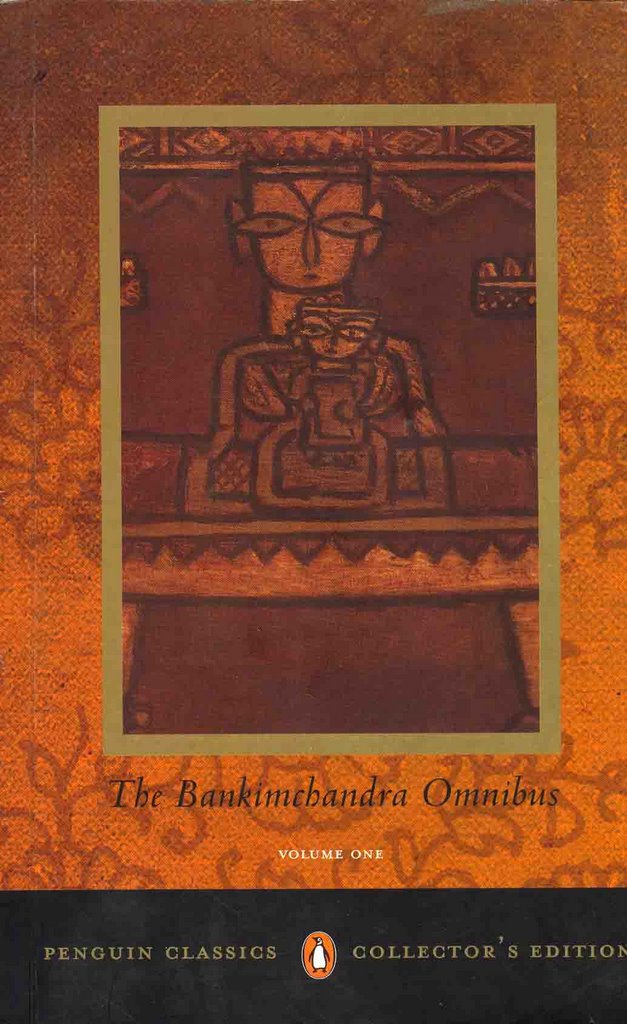
The Bankimchandra Omnibus (volume 1)
Bankimchandra Chattopadhyay
Penguin Books, 2005, pp 535, Rs 495

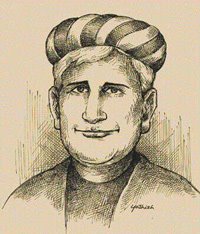
The life of Bankimchandra Chattopadhyay, one of the most influential Indians during the nineteenth century British colonial rule, is as legendary as the works he meticulously and prolifically penned. Born in Kantalpara, West Bengal, in 1838, he became the first Indian to earn a BA degree. He also served in the Indian Civil Service as deputy magistrate and deputy collector. Chattopadhyay is, nevertheless, known for his path-breaking novel, Anandamath (1882); the verse ‘Vande Mataram’ from the book turned out to be the anthem of the nationalists during the Freedom Movement and today it is the National Song of India. It is another matter though, that there is a school of thought which thinks that Chattopadhyay was a Hindu nationalist rather than a secular freedom fighter.
But nothing will diminish the image of a master storyteller who has left behind a huge and varied array of literature for centuries to savour. And now, thanks to meticulous translators like Radha Chakravarty, Marian Maddern, S N Mukherjee and Sreejata Guha, we can savour the first volume of the Bankimchandra Omnibus, a veritable feat. Space doesn’t permit delving deep into each and every novel (Kapalkundala, The Poison Tree, Indira, Krishnakanta’s Will, Rajani) that has been featured in this volume.
But a brief overview of the stories — Chattopadhyay’s best-known five works in English translation — would suffice. Kapalkundala narrates the story of Nabakumar, a young damsel called Kapalkundala whom he rescues from a tantric intent on human sacrifice and the beautiful Lutfunnisa who is bent on marrying Nabakumar. The narration of the story, set in the Bengal of Emperor Jehangir’s time, is a bit odd in English as it is a verbatim translation of 19th century Bengali (The same may not be true with stories by other translators). The translator’s intent is undisputable — to preserve the originality — but it could have been easier for the contemporary reader if the archival tone had been toned down.

Light-hearted tale
If The Poison Tree, set in Chattopadhyay’s time, narrates the heartrending story of Nagendra, who is torn between his devoted wife Suryamukhi and the bewitching young widow Kundanandini, Indira is a light-hearted tale of playful intrigues. Krishnakanta’s Will is the most powerful and well-translated story in the collection. It is about a tragedy of lust, infidelity, greed and death that revolves around Govindlal, his wife Bhramar, the attractive widow Rohini and a stolen will. And finally an Indian story that is told in first person — Rajani. It is about a blind girl and two men and has strong psychological undercurrents.
As is evident, Chattopadhyay’s novels (his first novel, Rajmohan’s Wife, was written in English) were too modern in that it talked about the then social taboos in lucid detail. Another contribution he made is that he merged the formal, Sanskiritised Bengali with the colloquial idioms of the spoken language to write prose narratives that even a layman could relish. And he is a master of all forms, be it historical romances, the then social conditions or that of nationalistic ethos.
— Sunil K Poolani / Deccan Herald

Thursday, March 30, 2006

Beach Boy


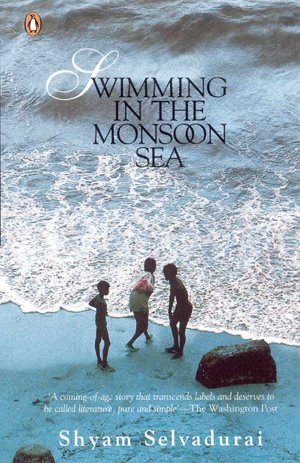
Swimming in the Monsoon Sea
Shyam Selvadurai
Penguin India
Pages: 211; Price: Rs 250

This is a tricky novel. No, don’t get me wrong. What I mean is it is so cleverly written that Shyam Selvadurai, the author, has massively struggled to get the language simple. (To those who haven’t heard this before: to write simple English is anything but simple.)
Born in Colombo, Sri Lanka, and moved to Canada at an early age, Selvadurai is one of the best writers in English Serendip, as the picturesque island was known in the Veda period, has produced. The others being, Romesh Gunesekera, Michael Ondaatje and Jean Arasanayagam.
Together they have created what is called the Sri Lankan writing in English an enviable position in world literature. What if most of them are no longer residents of the country they hail from.
Now, Swimming in the Monsoon Sea, the latest and the most vibrant work by Selvadurai so far, narrates an unassuming story of a fourteen-year-old boy named Amrith whose trials and tribulations take the reader to new platitudes. Amrith is an orphan; well, somewhat. He is being raised by the vivacious and no-nonsense Aunty Bundle, the best friend of his deceased mother, and the kind-hearted Uncle Lucky. The couple has two daughters, Selvi and Mala, who provide a taunting presence throughout the book, though they love Amrith like a dear brother.
Despite the love and affection Amrith get from the family and other friends (and he is considered to be a role model “son” among other households) he is a loner, always finding solace in things unnatural. The story then talks about how his father and mother died and how he became a virtual loner, adoption apart. Mystery shrouds the death of his parents, though it is not explained in lucid detail, and there is no need to. The life goes on and lots of characters appear and disappear: Kuveni, the mynah which refuses to talk; the scandalous Lucien Lindamulage, the gay architect; Miss Rani, who is the manager in the office of Uncle Lucky, who shares a mystical relationship with him.
Then comes the Inter-School Shakespearean Competition, a yearly event, which has a major role to play in both the life of Amrit and also the novel. The previous year Amrith had played Juliet and had won the cup for Best Female Portrayal from a boys’ school. And the current year they are playing the last scene from Othello, and the novel, in vivid detail, describes his relentless effort to bag the coveted role of Desdemona, Othello’s wife. He almost lost the role to a boy named Peries.
Life still goes on and then happens — or arrives — an incident which will totally change the profile of the protagonist. One day, Uncle Lucky encounters, while Amrith was along with him, a person on his way to their office, where Amrith goes to learn typing. He is Uncle Mervin, the brother of Amrith’s mother. Uncle Mervin (and his father) was always unkind to his sister and he is now in Sri Lanka (he lives in Canada with his son Niresh; Uncle Mervin is divorced and his wife has married a Christian evangelist-farmer) to sell off an ancestral land in which Amrith too can stake claim as it was a land so dear to his mom. Amrith, in the meantime, learns about the details of his mother’s family life and the cause of her bitter conflict with her brother.
It turns out to be that Niresh, who has accompanied his dad to Sri Lanka, is too keen to meet up with his cousin and forge a bond. Niresh is an impertinent spoilt brat who always insults his father, and Uncle Mervin doesn’t approve at all of his son’s new-found relationship with Amrith. What follows is a hilarious double-act, and both of them start liking each other; the two cousins even almost reach the level of exploring each other sexually. Amrith attains confidence due to his Canada-returned, cigarette-smoking cousin and his world view, too, changes in the course.
With Othello as a perfect backdrop, the narration then reaches a level where Amrith finds himself totally inundated in a disastrous jealousy. One complaint this reviewer has towards the book is that the title is misleading: there is some swimming, but less of monsoon and sea. And the beautiful cover, too, depicts the same.
That apart Selvadurai, whose earlier novels Funny Boy and Cinnamon Gardens had placed him firmly in the literary firmament, has upgraded his points with this lush, languid but pure and simple novel. Three cheers to him.
— Sunil K Poolani / Sahara Time

Monday, March 13, 2006

The Classic Double-Act Retold


The author has the unique ability to celebrate tragedy, not an easy task

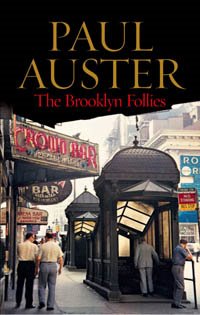
The Brooklyn Follies
Paul Auster
Published by Faber and Faber Ltd, 2005
pp 304, $ 10. 99

If Sartre and Camus were once the great existentialist double-act, Paul Auster, in Brooklyn Follies (his magnificent new novel) draws a picture of Nathan and Tom, an uncle and nephew double-act.
To quote Bryan Appleyard, if Sartre and Camus were, “the intellectual heroes of the black-clad, white-faced generation that became, later, the beatniks and hippies,” Nathan and Tom are the archetype of one another: Nathan, a divorced, lung-cancer patient looking for a quiet place like Brooklyn to die; Tom, who wants to get away from life and a once-promising academic career in general. But yes, they are the present-day, Bush-period existentialists (a rare breed to find in the USA today) who are in love with Kafka and seem to know every titbit of the German genius’ life.
Brooklyn Follies is full of unexpected twists and turns that occur in a sleepy little American town. The incidents are quirky, most of the time subtly and dryly hilarious; at certain times the passages may sound slow and uneventful, but suddenly there are these magical-realistic occurrences that hold the reader by her/his jugular vein.
Characters vividly flash through the pages. The bisexual Harry Brightman — ex-convict, ex-con art dealer and the owner of the shop (where Tom works) that deals in antique books — really stands out. So does Lucy, Tom’s impertinent niece who comes into the duo’s life. Lucy, who refuses to speak most of the time, unwelcomingly acts as a catalyst, bridging the men’s past which quite often offers them the possibility of redemption.

Their colourful lives
Tom couldn’t have asked for a better partner; Nathan is a facilitator in several respects. Thanks to Nathan, Tom can talk to his dream women, Nancy Mazzucchelli, a mother of two and a jewellry-maker. Then there is Nathan’s infatuation with Marina Gonzalez, a waitress, to whom he presents a necklace, which eventually turns out to be a bone of contention between her husband and Nathan.
Both Nathan and Tom have a disturbing past and a wrecked family, whichever way you take it. If Nathan is a divorcee and has a daughter who hates to talk to him, Tom has a wayward, bohemian sister who is a former porn actress and who enigmatically disappears often, only to reappear in different avatars.
Nathan finds solace in writing a humble book, The Book of Human Folly (though the title is, to his own admission, pompous), in which he is planning to set down, in the simplest, clearest language possible, an account of every blunder, every pratfall, every embarrassment, every idiocy, every foible, and every inane act he had committed during his long and chequered career as a man. Brooklyn Follies is that book.
The end is predictable, though, but what matters are the dramatic and colourful events that unfold in between the covers.
Auster has this cute ability to celebrate tragedy; it is not an easy task. He has mastered the skill now in this novel after he experimented it in his earlier books like The Book of Illusions and Oracle Night.
A racy read, this book is highly recommended to all Auster aficionados and new readers alike.
— Sunil K Poolani / Deccan Herald

Monday, March 06, 2006

Can the English language survive after Bush?


"The vast majority of our imports come from outside the country. "
— George W. Bush
"If we don't succeed, we run the risk of failure."
— George W. Bush
"One word sums up probably the responsibility of any Governor, and that one w! ord is ' to be prepared '. "
— George W. Bush
"I have made good judgments in the past. I have made good judgments in the future. "
— George W. Bush
"The future will be better tomorrow. "
— George W. Bush
" We're going to have the best educated American people in the world."
— George W. Bush
" I stand by all the misstatements that I've made. "
— George W. Bush
"We have a firm commitment to NATO, we are a part of NATO. We have a firm commitment to Europe We are a part of Europe.
— George W. Bush
" Public speaking is very easy."
— George W. Bush"
A low voter turnout is an indication of fewer people going to the polls."
— George W. Bush
"We are ready for any unforeseen event that may or may not occur. "
— George W. Bush
"For NASA, space is still a high priority."
— George W. Bush
"Quite frankly, teachers are the only profession that teach our children. "
— George W. Bush
"It isn't pollution that's harming the environment. It's the impurities in our air and water that are doing it."
— George W. Bush
"It's time for the human race to enter the solar system."
— George W. Bush

God help America...

Thursday, March 02, 2006

Azul is Macando


The Girl
Sonia Faleiro
Penguin / Viking
Pages: 124; Price: Rs 250

This slim book comes as a whiff of fresh air in these times of the rotting smell originating from a whole lot of junk which is apparently called “Indian writing in English published by Indian publishers”. Sonia Faleiro, a journalist with the venerable Tehelka magazine and a debutante author, has done a remarkable job by penning The Girl, an outstanding lyricism set in a fabulous, magically-realistic place like Azul village in Goa.
Now, while saying that the story develops and ripens in a place like Goa, do not get this notion that it is all about “picture-postcard Goa”. Far from it. It is about the angst, agony and disillusionment, the death, the bareness of the sultry land, the feni, the pork, the plain wastefulness and lethargy of a sleepy terrain, the cemeteries…
Faleiro’s is a very powerful work in that poetry and life merge with subtle felicity and is one of the best works that have come out in India in recent times; what makes this effort worthwhile is that the author is quite young to achieve this feat. It is quite Marquezian in its plotting, narration and style. Savouring this book and many a time you will be reminded of One Hundred Years of Solitude — it is a sheer pleasure, thank you. Azul is Macando.
The novel starts with a promising note: a funeral. A girl is buried on a depressing December evening, and the place is a drowsy hamlet in north Goa. Look at this imagery: “The air was thick with rose petals. Sweet, fleshy skins, red, yellow, pink, orange, waltzed with the wind before falling gently to earth. Her grave was a bed of roses... The fragrance of red rose and pink rose and fresh rose and dead rose.” You cannot get it better.
So, this girl is dead, but there are these two guys who knew her quite well and loved her, too. And they are curious like a cat, to know and to discover what went wrong and why she died. A spy job. What best way other than referring to her diary? So they devour it. The go through the pages she had penned in her sanity or lack of it and they discover — and share with her, though she is dead — “the loneliness and abandonment, of memories branded so deep that they return to haunt the soul, and of hope so powerful that it negates reality and opens the doors to a future that is never to be.” And at the end is the discovery of love and betrayal.
The character that attracts you most in the whole book is the twenty-six-year old Simon. And, yes, his mother too. Simon runs this derelict shop (that contains “orange juice well past its expiry date” and “postcards commemorating the hundred-and-twenty-fifth anniversary of the reconstruction of St Jude’s ten years ago”) and his sole customer was this girl who died. Later he reconstructs it (so wittily described) with the help of two quirky comrades and his mother takes charge. A joyful read.
Faleiro has done fantastic job and one hopes she will continue to do it. Bravo. Well, if it doesn’t sound PRish, a suggestion: do buy this book.
— Sunil K Poolani

Tuesday, February 28, 2006

Happy hunting, Mr Governor!


To George Bush Jr.
Would-be Emperor
Former Clown Prince
Currently US President

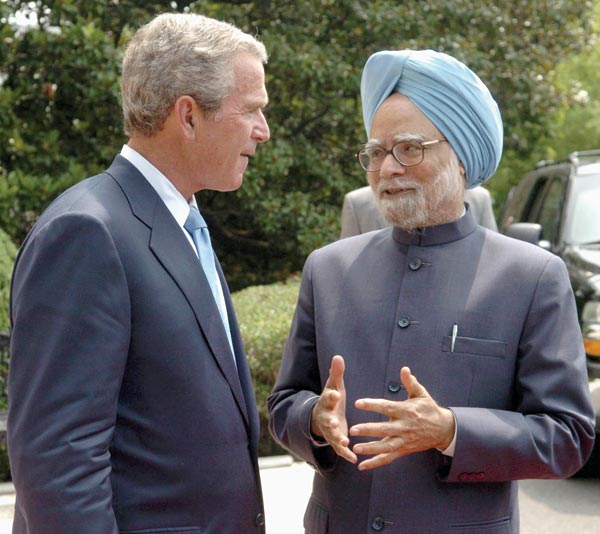
Dear George 'WMD' Bush,

It is with both great happiness and grave apprehension that we the people of India await your arrival in our country. Happiness because in the few hours you will be engaged in shaking hands with our country's leaders your fingers will be — at least for a little while — away from the nuclear doomsday button. Happiness also in the hope that the grease you put on the palms of your political underlings here will make the many triggers all of you control that much more slippery.
There is a lot of apprehension too as your visit could become the latest source of pollution in our ancient land already poisoned over the years by your country's various multinationals- from Union Carbide of Bhopal gas notoriety to Monsanto of GM seeds infamy.
Your own crimes against humanity in Iraq, Afghanistan and Guantanamo are of course far worse than that of these corporations and if the Ganges were not already as contaminated as it is unfortunately today — we would have happily recommended a long dip in its holy waters.
We know you have friends — or shall we call them loyal subjects- in very high places in our country. Shri Manmohan Singh, misleadingly called 'Prime Minister of India' when he is really a CEO of your subsidiary company — will be there constantly at your beck and call. But then for this former civil savant turned international servant- whose soul and spine were stolen many moons ago by the IMF, World Bank and other dark forces you represent — it seems to make little difference what master he serves.
You will also find the Congress that rules India even more pliant than the US Congress you control back home. Having buried Gandhi and Nehru in both body and spirit long, long ago this political party that once fought the British Empire has become the Trojan horse of American Imperialism in India.
There are others too from our country that will welcome you — captains of industry, merchants, bureaucrats and sections of the Indian media- who already think of themselves as junior partners in your vile Empire. The truth is they are as much in awe of the weapons of war you so wantonly wield as they are mesmerized by the petty commercial carrots you dangle before their eyes.
But make no mistake 'Mr Wannabe President of the World' — India is far more than the name of your pet cat on the lawns of the White House. And though our leaders lovingly wag their tails at you it is not a domesticated dog either.
Instead it is a full-blooded country of over a billion people who have seen through many tyrants of your type several times over in their long history. We packed off the British Raj just over half a century ago and have no intentions of letting its American offspring sit on our heads instead.
And we are not alone in our struggle against Imperialism on this globe either.
From Vietnam to Venezuela and Iraq to Indonesia we have had and continue to have deep ties with people everywhere from around the world who have stood up in defence of their national dignity, sovereignty and the right to conduct their affairs in whatever manner they see fit. We have long historical memories too of the US establishment's atrocities and massacres around the globe Hiroshima, Haiti, Greece, Guatemala. Cambodia, Chile — the sacrifices of countless brave citizens will not go in vain.
Your regime's latest attempts to bully or bribe the Indian government to join your machinations against Iran will also go nowhere because the people of this country will forever resist your immoral attempts to capture the assets of weaker nations by force. By tempting the foolish Indian government with a dubious nuclear pact you have attempted to divide and rule the developing world but we can see through your imperial politics and have the means to unravel it too. Your concern for the `national interest' of India in striking a nuclear deal is going to make our country powerful to the point of extinction.
Mr 'Emperor', not only you do not have any clothes on, you are trying to pull some non-existent textile over our eyes too! So Mr 'Emperor' when you soon land in India remember — irrespective of what your weather 'experts' tell you- the temperature on the ground will be several degrees hotter than anybody can predict. True, this will be partly due to the general rise in global temperatures your regime has so wantonly contributed to plus the hot air you have such a talent for — but much of the heat will really be due to the burning anger aroused by your presence in our midst.
Believe us we promise a very warm welcome to you and all in your entourage and hope to make your trip as memorable as possible. This collection of films on the crimes of your country's various regimes we are showing the Indian public around the country is just the first of many salvoes we are firing.
It is still not too late to turn your jets back to Washington where Uncle Dick 'Shotgun' Cheney eagerly awaits your presence on a long and exciting safari somewhere. Happy hunting and watch your back.
Yours very, very warmly
Films for Peace Team

Discussing the Rape of News


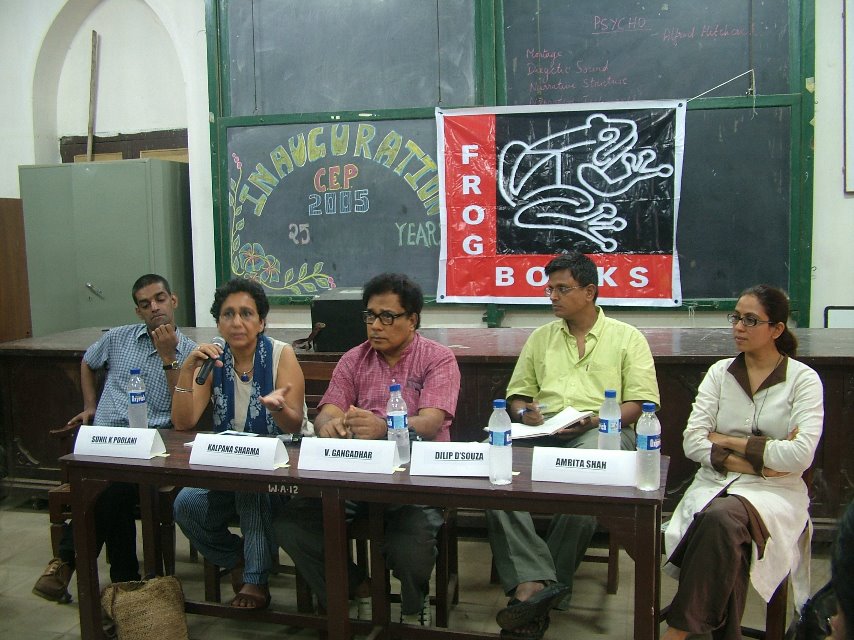
Frog Books arranged a seminar at Wilson College, Mumbai, for its journalism students. The theme of the seminar was, "Should Papers Sell Editorial Space". Seen (from left) are: Sunil K Poolani, publisher and managing editor of Frog Books and the editor of The Rape of News, which tackled the issue; Kalpana Sharma, deputy editor, The Hindu; V Gangadhar, well-known media critic and senior journalist; Dilip D'Souza, columnist and activist; and Amirta Shah, cossulting editor of The Indian Express.

Saturday, February 25, 2006

Show me the Money, Honey

Yesterday I shot a man. Almost. Well, this is not about a man/woman thing. For, if the person behind that nationalised bank counter was a woman, I’d shoot her, too.
The day began like this. 7 am sharp. I had called the car rental to report at my doorstep as I had to take my father for his cataract operation. This was his eye number two. A couple of years back, it was his eye number one. Last week, my mother had her cataract operation by the same phaco method or whatever this latest laser surgery is called. It was her eye no 2 – right or left it really does not matter. By the way, my husband takes the car to work and holds it to ransom from 9 am to seven pm and he has made it very categorical that we cannot afford a driver unless I drive it myself. Fair enough! Only I have been told that I am not cut out to drive a car (though I have taken lessons) for I am terribly absent minded. I do have secret vices – of dreaming of certain handsome Hollywood actors ruffling my tresses when I cross a street. But to get back to the eye. The surgery took only about 15 minutes. I settled the bills, while my seventy-five-old-father basked in the attention of the young nurses. Very soon after, with the eye he could see, he saw his wallet in my hand and gently took it back as though I was going right into a shopping mall with it. As per plans, I settled him down in his own comfortable bed and under my mother’s care for now she has both eye number one and eye number two clear and working well. Then the fun started. I had the car to myself for about half an hour so I planned to squeeze in some bank work. Namely, depositing a couple of cheques and paying my daughter’s fees for which it was the very last day. Roughly ten minutes at both. I filled in the chalan book and gave it to the man across the counter. The clock was ticking away. “What do you want me to do with it?” he asked. Well, I could not possible tell him, Eat It! Not yet, for rubbing off the bank employees the wrong way, has its own repercussion and years of practice have made things perfect. We are tested in sarkari offices so I requested, and then pleaded with him to take it this time, for I was in a bit of a hurry as the other bank in which I paid my daughter’s fees, would soon close. It was not only a little way off but it was worse in such matters. Besides, the car was doing a five hour duty and fifteen minutes extra would mean extra rupees, more so as my retired dad was paying for it. “Why don’t you give the cheques to the man who sits upstairs?” the bank man was telling me. It’s not that he could not take it. He would not take it. Climbing those steps would take another few minutes. The clock ticked away. I recalled my daughter’s fee bank which had once refused to take in the fees even though there were a couple of minutes left and only when my husband who was with me, had told him that he had just left a very sick mother at the hospital, that he had relented.I started to panic. The man across this nationalized really was not busy. Oh I just remembered – he was enjoying a hot cup of tea and perhaps Fifty Fifty biscuits. Maybe I was tired or hungry or both. For which he was not responsible I know. But at that very moment, I flipped out my gun. Do not ask me the make. Homegrown cannon balls that were not bad enough to make a sailor blush but close enough, rained on him.. I fired at him verbally and blindly non-stop. Something had snapped within me. I do not remember what I had said. Maybe those among you who are reading this and are very organized, will train their guns on me. I am a stickler for time too. I knew later when I would blabber it to my family over supper, they would calmly enquire – is there any shop or bank left in the north 24-parganas district where you have not fought with someone? I see youngsters around me, on buses, who refuse to budge even a little to make space for the elderly. We see cars refusing to make way. Any extra query at any information desk, draws those angry looks. Why are we impatient and angry all the time. Why do we feel put upon? How can any job leave you with doing this much and no more? What has happened to a CIVIL SOCIETY ? Maybe everything is still not lost. For the same bank brought another employee, close on my heels, when I stamped out (the earth must have shook – another spousely loving remark). ”Calm down madam, calm down, ” the gentleman pleaded. “Give me your cheques and have a good day!” Or whatever was left of it! — Manjira Majumdar

Thursday, February 16, 2006

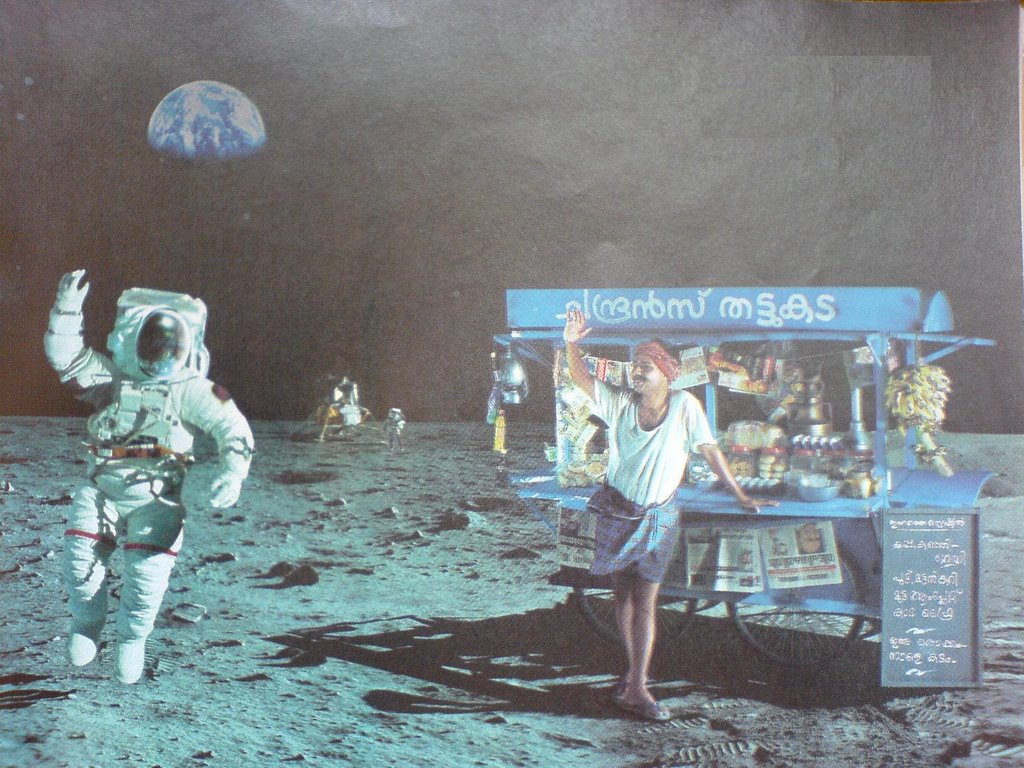
When Niel Armstrong Met Chandran Chettan


Malayalee makes impossible, possible!
When Niel Armstrong first landed on Moon, he met a Malayalee, Chandran Chettan, who had settled there with his chaayakkada, or teashop, for a long time.

Saturday, January 21, 2006

Not Just about Dancing


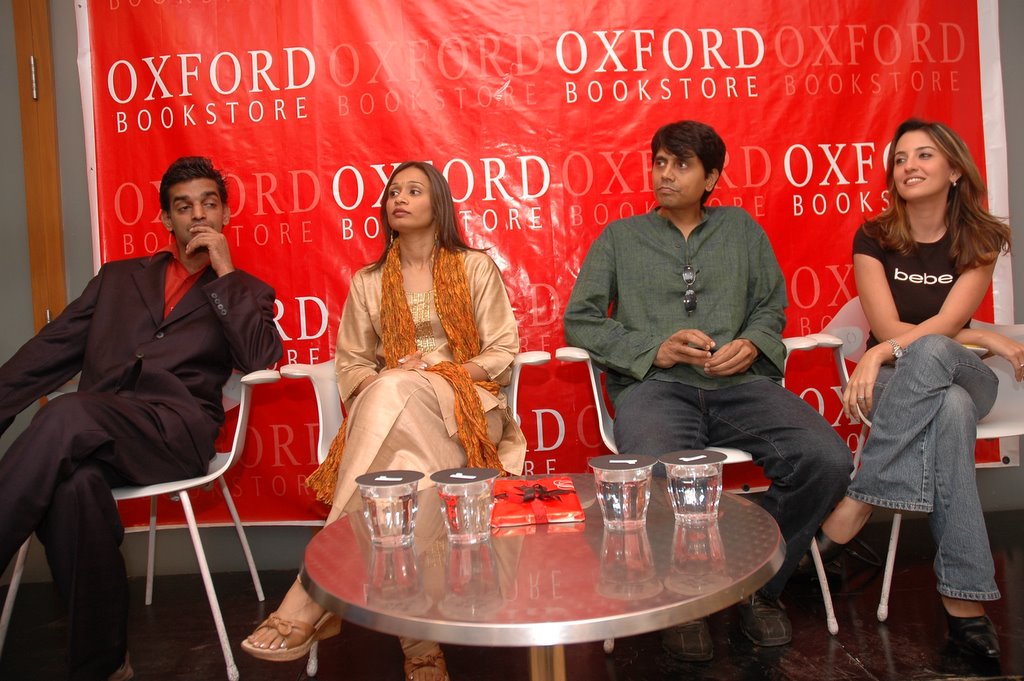
Mumbai, 9 January 2006: Rucha Humnabadkar today launched her debut, heartrending novel, Dance of the Fireflies, published by Frog Books, at Oxford Bookstore here. The session was presided over by acclaimed filmmaker Nagesh Kukunoor and leading Bollywood actor Perizad Zorabian, who also read out from the book.
“As a journalist, I have had several experiences with India’s street children and their relentless pursuit of dreams has been my inspiration. In fact, the protagonist of my novel is a young street child who survives the big city. The book zeroes in on keeping a dream alive in the face of adversity and brings to life the indomitable spirit of human endurance, hope and desire,” says Humnabadkar.
SYNOPSIS: Dance of the Fireflies is a heartrending novel set in India. In a quest to fulfil his dream, Chotu, a seven-year-old boy, leaves his remote village in South India for a life in the city. His pursuit takes him through a labyrinth of bittersweet experiences. Struck by hunger, and plagued by emotional and sexual abuse at the hands of Aslam, a man who takes advantage of his vulnerability, Chotu questions his decision to leave his village. He finds reprieve in his friendship with Tasneem, a young girl who loses her family when the tsunami waves devastate her village on the coast of Chennai. Their paths intertwine as each explores life and realises their destiny. Through their experiences we ascertain the implications of living a repressed life.
How do you forge friendships when trust becomes a fragile sentiment? How do you deal with the loss of family? Lastly, how do you keep a dream alive in the face of adversity? The novel is evocative of the noteworthy moments in most people’s lives.
AUTHOR BACKGROUND:
Humnabadkar, 27, born and raised in India, has written and directed three English-language plays and worked closely with acclaimed filmmaker Nagesh Kukunoor on his early films. She earned a master's degree from Carnegie Mellon University in the US, and currently works for eBay in northern California.
ABOUT FROG BOOKS:
Frog Books (http://www.frogbooks.net/), started in 2003, is the fastest-growing independent book publishing company in India today. It has so far published more than 40 titles which include fiction, non-fiction, cinema, children’s literature, poetry, social issues, journalism, business, graphic novels, travel writing. The authors published range from countries like New Zealand and Spain to Germany and the US, and comprise a wide spectrum of people from different classes, communities, experiences, genders and ages.

Friday, January 06, 2006

Patna Wrong Route


-------------------------------------
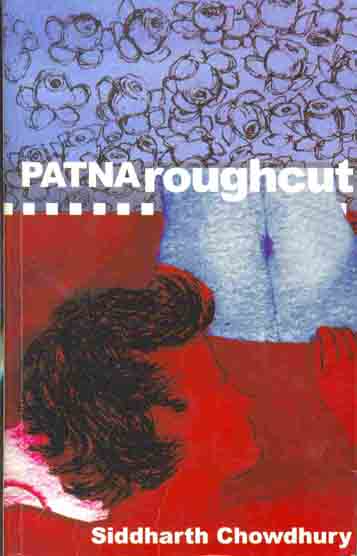
Patna Roughcut
Siddharth Chowdhury
Picador India
Pages: 187; Price: Rs 250
-------------------------------------
What you are going to read below is not a review. Just some thoughts while I survived the book.
The production: The total word count of the book is less than 30,000 but it has been stretched out such a way that it comes to 187 pages. The advantage? You can price it at Rs 250.
The publisher: It looks like Picador India was founded to promote Bihari writers or/and books on Bihar. So the “Also available’ list in the end entertains you about the books they have published so far. Pankaj Mishra has published three. Raj Kamal Jha, two. Tabish Khair, one. And, now, one on Patna. Thrash the guy who said Lalu Land is getting neglected.
The writer: A Bengali, Chowdhury was born in Patna, presumably in a Bengali neighbourhood, and that’s the problem. He finds everything about Patna and Biharis funny, tongue firmly in cheek of course. Now he lives in New Delhi and works in publishing, but can’t resist chuckling even today when he thinks of his place of birth.
The book: The blurb educates us that this is “an elegy to the intimate neighbourhood and a poem of protest.” Far from it. Why? Sample this line: “Patna, though more sinned against than sinning, is simply a place with no literary traditions and whatever few writers, poets, novelists that have emerged are not because of it but in spite of it.” Where’s Lalu’s stick?
Then, again, the blurb tells us: “It is a story of love, idealism and sexual awakening.” Ahem. There is only platonic love, absolutely no idealism and about sex, savour this: “Rudrada’s younger sister, who once upon a time Chokon claimed he had seen sucking Rudrada’s cock…” It sucks. Even the Bad Sex in Fiction Award guys won’t touch this with a bargepole.
The style (or the lack of it): What to say about a book which starts with this line “Dreams are like cut-glass carafes”? The writing is absolutely gimmicky, though it follows a staccato style, a la The God of Small Things. In Arundhati Roy’s case it worked. Chowdhury fails — miserably. The whole book reeks of Bengali “superiority” and Bihari “inferiority” and this is unfair, even if it is true.
It is not worth talking about the story, as there is no story. It is, at its best, a collection of short stories, and the only connecting thread is that some characters reappear. The writer can get away by titling the book ‘Roughcut’ but that’s no excuse for producing a shoddy work. To be fair, in some places the writer comes up with promising lines, but they do not contribute to making the book even a passable one. So you cannot call this as Chowdhury’s “first novel”; it is his “first attempt to write a novel.” The only advantage is that you won’t take much time to read it.
— Sunil K Poolani

Tuesday, December 27, 2005

Publishing in 2006

Circa 2005 could have been a damp-squib year, or a mundane buffer, between 2004 and 2006 for many a sector. Save for publishing. The year was not an earth-shattering one for this industry, but it has provided enough ammunition that the following year(s) will witness explosions one after the other and the whole text could well be rewritten — for better or worse.

First things first. Publishers the world over got a bolt from the blue when Google Print decided to scan every book they could lay their hands upon and create an online repository. Which means, one can practically read any book published in Tamil to Creole — all at one keystroke — without paying a single paisa. Readers rejoice. They do not have to hunt for a particular book in dusty shelves. Publishers wail. For obvious reasons.

Does this amount to copyright violation? Authors’ Guild and other industry bodies think so and have sued Google. As it is definitions of copyright is an absolute muddle because it lapses 50 years after the author’s demise. So more and more publishers will print and publish Tagore or Orwell without paying any royalty to the original publisher or the authors’ legal heirs. Nobody seems to have a clear-cut idea over what actually is a ‘copyright’. Reproducing 500 or so words of a work for review or promotional purposes does not breach any copyright violation, but that may not be the case of a 100-word poem.

While admitting that the future of this fractured industry seems detrimental in 2006, one cannot rule out the fact that people are really getting hooked on to buying (who cares whether they really read) books. The reasons may vary (status symbol; to give an intellectual air), but crass publishers will have the last laugh.

Now, coming to the Indian publishing scene, the big, brash and bunkum ones will rule the roost. Consequently, many Chetan Bhagats will outsell an Amit Chaudhuri (he is planning a book on Kolkata and a novel on music in 2006) and Indira Goswami (a novel, a short story collection and her autobiography sequel). Ditto motivational or self-help books, whatever they mean.

From the international scene the books that will hit the Indian market (and in all probability, become a hit) will be Jan Morris’s Hav, a rare treat, and Carlos Fuentes’ The Eagle’s Throne, a fictional expose of Mexican politicians in 2020.

Another trend that will make the industry more competitive will be the setting up shops of international publishers, tapping, what they think, is a highly potential market. Prominent among them are Random House, Taylor & Francis, Disney Publishing Worldwide and Thomson. Readers are bound to benefit as the quality of the text and production will improve since competition will set in.

There wouldn’t be a marked difference in terms of the reading public’s appreciation of what is euphemistically known as “Indian writing in English published by Indian publishers”. The sure way to success will of course be, “first publish abroad (and get a fat advance and a box item news as a bonus) and then make waves in India”. Sad, but it is true that only a few independent publishers will be able to face the internecine and meticulous war led by big publishing tycoons. Thus, every middle-level publishing house is on the perennial lookout for the next Bhagat, Anurag Mathur, Shobha De or a Khushwant Singh. Well, spice it up by adding a Paulo Coelho or two from foreign land.

Mediocrity will be the catchword this year. You cannot blame the publishers as most of the English-reading public in India’s urban centres are that: mediocre. The publishers are making hay while the sun is shining. And as this yuppie generation’s aspirations have grown voluminously, they swear by and die for ‘inspirational’ books, which will remain a multimillion-rupee industry this year, next year and so many years to come, till such time better sense prevails. Till such time the space for good writing in English will remain cramped.

Books do not sell on its merit alone; it’s a product today, and it will remain thus tomorrow. Good reviews in influential publications no longer ensure good sales; word-of-mouth publicity and ludicrous plugged-or-paid interviews alone work. Or ask the PR companies that make a killing out of this new bunch of cretins who will never get published in the magazines published by the colleges they might have studied in.

One solace for the run-of-the-mill publishers would be the ensured success of cookery, fashion, cinema and children’s books. Since the advent of designer bookstores, these genres will remain the favourites for a long time to come.

Talking about bookstores, India will witness a massive penetration of fancy bookstores. Crossword and Oxford Book Store will open more and more brightly-lit bookstalls in every nook and cranny of the metros and several coffee shops like Barista and Café Coffee Day will find extra space for books — what if they are titled Who Moved My Cheese or One Night @ the Call Centre.

Two emerging trends in the Indian market will be the proliferation of books in regional languages and fiction giving way to non-fiction in English language. Penguin has already realised the immense potential in regional language fiction and more are expected to follow suit. Coelho, after Gabriel Garcia Marquez, has already found a huge market in a language like Malayalam and it is a matter of time that Rohinton Mistry and Amitav Ghosh will become household names — breaking regional barriers. The dividing line between fiction and non-fiction has almost become blurred, so you can expect more Vikram Seth-type literary non-fiction hogging the limelight.

Indian publishing, whatever its pitfalls and challenges are, will remain a force to reckon with and India will continue to remain the third-largest publisher of books in English language. If it has to withstand the not-so-salubrious climate, they have to invest more in quality and the publishing houses should realise that mediocrity alone will not stand the test of time. People mature as they think as they read.

(The writer, Sunil K Poolani, is the publisher and managing editor of Frog Books, a Mumbai-based publishing house that promotes fiction and young talent, not necessarily in that order. He can be contacted at poolani@gmail.com)

Sunday DNA, January 1, 2006